海の最も古い記憶は白黒写真の中です。たぶん湘南のどこかの海水浴場。
山梨県の農家で生まれた母親が両端の角ばった黒いサングラスをかけて僕を抱き上げている。
時は昭和の東京オリンピックの頃。母は上京し結婚して街の人になりかけの頃です。抱かれている僕は大泣き。臆病な子どもだったから波が怖くて母親にしがみついていたのだそう。
彼女の佇まいだけを見れば、小説「太陽の季節」の風情です。
その母も91歳。よく生きている。緑内障の手術だ。脚が痛くて切ない。80歳の頃には敗血症であと数日の命だと医者に言われたことも。
こんな「海」もある。
小学生のとき。同級生の家の別荘があった千葉県、一宮の海岸。当時は遊泳禁止なんて言葉はあったような、なかったような。波が高い方が心ざわめく。その家から一本道をただ真っ直ぐに歩いてたどり着いた海で泳ぐ。
セイバーも浮き輪もない。どんどん沖に出ていく。大波が来たら潜れば良い。親たちは大波3つくらい向こうの遠い海岸に立っている。心配だっただろうな。でも危ないからやめろとか、戻ってこいとは言わない。子どもたちが疲れてやめるまで待っている。今なら大騒ぎなはずだ。
生と死の境界線が見えていたのかも。「なんとかなる」より、もっと本能的に。
ん?やっぱり思い出すのは母親の顔だ。親父もいたはずなんだけど。
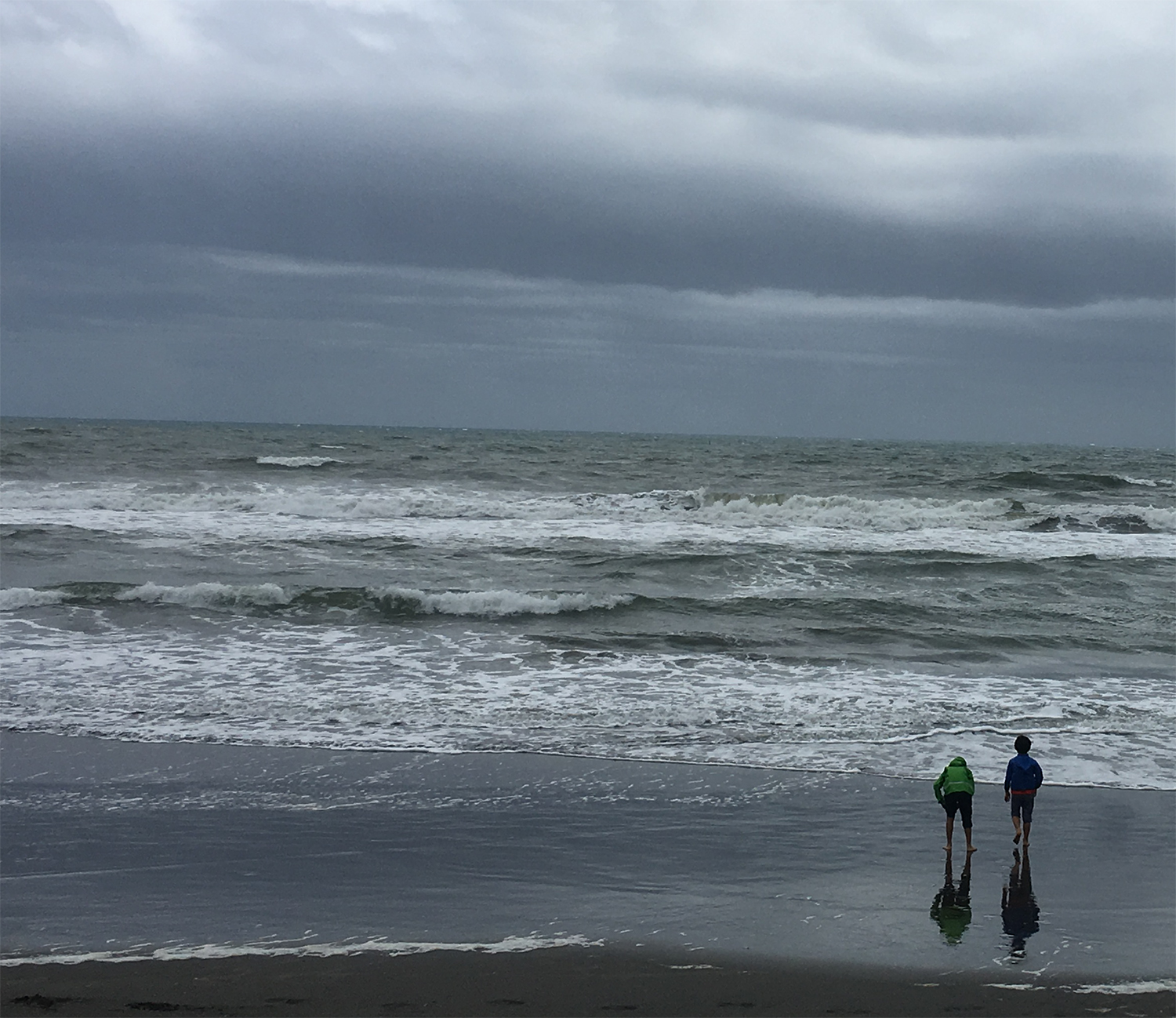
自分も親になった。45歳で生まれた長男。そりゃかわいい。愛しいに近い。
低学年の頃、海釣りについて来てくれた。内房の漁港の離れの堤防に上がって、一緒にルアーを投げた。漁師のおばさんが、危ないよって視線を投げてくる。僕ら親子はライフジャケットもつけず夕暮れまで釣りを続けた。釣果は小さなヒラメの子、ソゲが一匹だけ。
小さすぎるけど、僕らは家に持って帰ることにした。息子もそうしようって言ったから。鮮度を保つために締めたつもりだった。帰り道の渋滞を抜けたアクアラインの海ほたるパーキングエリア。車の後ろに積んだアイスボックスの中でガタゴトと音がする。ソゲが跳ねた。
「魚、生きてるね」って息子が言った。僕たちが知らない生命力を彼は海で知る。
駐車場のガソリンと海風の匂い。
あれも海の思い出です。
That’s the Sea
My earliest memory of the sea lives in a black-and-white photograph. Probably on a beach somewhere in the Shonan area.
My mother, born to a family of farmers in Yamanashi, is wearing dark, angular sunglasses, holding me in her arms.
It was around the time of the Tokyo Olympics. My mother had moved to the city after just getting married, on the verge of becoming a city woman. I was crying my eyes out in her arms, clinging to her because, apparently, I was scared of the waves. A timid child.
She looked as if she had stepped straight out of the novel Season of Violence.
Now she is 91. Still alive, still resilient. She’s undergone glaucoma surgery. Her legs ache painfully. When she was 80, the doctor told us she had only days to live because of sepsis.
There are other “seas” too.
When I was in elementary school, a classmate’s family had a beach house in Ichinomiya, Chiba. I can’t recall if there were even “No Swimming” signs back then. The higher the waves, the more my heart stirred. We’d walk down a single path from the house to the beach and go for a swim.
No lifeguards, no floaties. We swam farther out into the sea. When a big wave came, we simply dove beneath it. Our parents stood far off on the shore, three big waves away. They must have been worried, but they never told us to come back or stop because it was dangerous. They just waited until we were too tired to swim. It was a lenient time back then—now not so much.
Maybe I was seeing the border between life and death. Something more instinctive than the simple belief that “it’ll be okay.”
Wait… Once again, I remember my mother’s face, though my dad must have been there too.
Now I’m a parent myself. My son was born when I was 45. He’s adorable, of course. A feeling close to love in its purest form.
He tagged along on my sea-fishing trips when he was younger. We’d climb onto a remote breakwater at a harbor on the inner coast and cast our lures. A fisherwoman would give us a look, warning us that it’s dangerous. But my son and I kept fishing until sunset, without any life jackets. Our catch of the day was small—just one baby flounder.
Too small to keep, really, but we took it home. My son agreed we should. I thought I’d killed the fish with the ikejime method to preserve its freshness. But on our way home, at the Umihotaru Parking Area on the Aqua-Line Expressway, we heard a faint rattle from the icebox in the backseat. The flounder was still alive.
“Dad, the fish is alive,” my son said. He discovered, by the sea, the sort of vitality we adults had long forgotten.
The smell of gasoline in the parking lot mixed with the sea breeze.
That too is one of my memories of the sea.